David Magang has done the Lord’s work, and I fear — like the prophets of old — his wisdom will fall on deaf ears.

Who is Magang?
First and foremost, Magang is a lawyer by profession, trained in the UK and based in Botswana. Born in 1938, he belongs to the unique generation born before independence during our ‘colonial phase.’ He studied law in London in the radical ‘60s: decolonisation, feminism, the civil rights movement, Cold War politics, nuclear disarmament, hippie culture. I have yet to read his autobiography The Magic of Perseverance, but I am curious how these movements shaped him as an individual.
In his own right, he is a founding father — not the political kind mythologised in archives, but the pragmatic kind. He established the first Motswana-owned law firm in 1970 before expanding into property development, purchasing Phakalane, one of the wealthiest suburbs in Gaborone. He tried his hand at politics with reasonable success. Today, he remains among the private advisers to the president, the man Batswana seek out when they hope to effect change.
How did I stumble on the book?
A week ago, at Exclusive Books, I was browsing the store, like netizens on the web, when I stumbled on Delusions of Grandeur, Vol. 2. Flipping through, I saw my aunt’s name — Dr Kathleen O’Connell — and paused. It was about the pension fund scandal.
Since my teens, I’ve heard her complain about her marginalisation in tendering. Despite the existence of capable indigenous professionals, Government entrusted our pension fund to South African investment managers who have no abode here. Rather they fly in for the day only to haul their profits off us with them. It’s a sad state of affairs; we operate as if we were a South African province, with little local protection. What I did not expect was that a local writer would problematise this at length — a whole chapter.
Granted, the book is ten years old, and only now do I discover it. Perhaps because it was self-published, and arguably, Exclusive Books (a South African book store) has little incentive to decorate its shelves with local writers, especially self-published ones, worse yet those who skip the editor’s eye. Yes, Magang’s book belongs to this group — ironic, given that he is a millionaire. I digress.
What is the book about?
The book has an ambitious scope, spanning across all major industries: business, banking, finance, agriculture, education, tourism, transport. Over 500 pages strong, it is both sprawling and meticulous. To his credit, Magang’s claims are well researched and evidence-backed, impressive for an industry outsider. His patriotism is unwavering and refreshingly unapologetic. It resounds in his frustration with the state of our nation.
Here is a small extract on agriculture:
“When nature has not been particularly generous in endowing a territory with the prerequisite resource wherewithal, it is not for government to simply sit on its laurels and resign itself to its circumstances. It has to do its utmost, literally move heaven and earth, not only to make maximum use of the little endowment nature begrudged it but to devise ways of getting around its predicament. That is what the Jews have done: they have carved out an agrarian niche in a country where weather and topography do not readily permit” (Magang 20).
And another on our reading culture:
“One of the plainest manifestations of deficiencies in our educational system is the deafening absence of a reading culture amongst our people. I have already made the case that our students only hunker down to read a book when an examination is looming. Otherwise, they will never touch a book, a worthwhile one, that is. When you go to Exclusive Books, you rarely encounter one of our own there: the shop is mostly patronised by foreigners” (Magang 73).
From these passages alone, one cannot help but feel implicated, if not culpable, in our predicament of professionalised complacency. As he likes to say: “there is much to be desired.” And he goes to great lengths to make it known.
My thoughts so far
I enjoyed the book, though at times I was disheartened by my lack of expertise in areas like macroeconomics to fully grasp some of his insights into the financial sector. I wouldn’t raise this as criticism unless he intended the book for a general audience. If so, he could have elaborated further on the significance of certain findings in layman’s terms. For instance, he claims commercial banks have a ‘100% profit ratio’ (Magang 104). A spectacular figure — but compared to what? How outraged should I be?
My favourite part was Chapter 3, where he unleashes a barrage of questions and criticisms at our education sector. As an educator, it was riveting to see my frustrations articulated in prose, and disturbing to see how little urgency government has shown in addressing them. Imagine dozens of children learning under the shade of trees while the then Minister of Education returns millions of pula from her budget to the treasury, claiming, “we knew not what to do with the money.”
As the Germans say: unheimlich — nothing is more disturbing than intentional negligence. Equally outrageous is the plummeting of quality education at every level, tethered to the neglect of public schools. Ten years later, we continue to cascade into the pit of adequacy. Teacher wages have risen, but the only thing rising higher is public arms at the appalling pass rates. It’s hard not to suspect embezzlement, or worse — speculate a deliberate hidden agenda to keep the masses down, as in Orwell’s Animal Farm. “Ignorance is strength” when politics thrives on manipulation.
Two flaws stand out. First, the absence of rigorous editing. For a book I consider seminal in our literary scene, it sets a poor precedent when the text is littered with wordy phrasing, awkward spacing, and dated expressions. Sentences like these are self defeating: “The thesis that the private sector is more efficient in providing water has also being debunked” (Magang 337). I laughed when he complained of youth “blasting Kanye West on their Walkmans” instead of reading (Magang 75). Walkmans…in 2015?
Second, his devaluation of the humanities and social sciences as serious fields of study was concerning, even for state sponsored learners. Perhaps this is generational mindset, as the traditionalist he is. Nowadays, STEM is in vogue, especially with the rise of AI. Software engineers and data analysts are in demand. Yet ironically, it is we social scientists who read, who think and who engage with books like his seriously. Much of Delusions of Grandeur is a social science undertaking. Dr Magang, you are one of us.
Many prominent statesmen — Barack Obama, Boris Johnson, Woodrow Wilson, countless business leaders — are well read in the liberal arts. Such degrees are not certificates in indoctrination, but proof of critical inquiry. Vision is birthed in the arts, for ideas inspire technological innovation, not the other way round.
What did others think?
I searched the web, and to my surprise, no one has seriously reviewed this second volume. My opening statement rings true: the monograph may well have fallen on deaf ears. The only mention is an article advertising the launch on Mmegi Online by the publishing house’s editorial director — hardly serious engagement.
But silence speaks. What of his suggestions? Has anything changed? Hardly. Education continues to underperform. Government has failed to diversify the economy. Lab-grown diamonds have compromised our main source of income, and our new president Mr Boko now entertains the idea of buying majority stakes in De Beers… Maybe I lack the foresight here.
If this is troubling enough, the Pula is scheduled for devaluation to align with the Rand. If our peripheral provincialisation to South African market forces was not alarming a decade ago, today we are nose-diving into their arms. We are “proudly South African,” while we #pushaBW only in the gaps they leave behind.
Who should read it?
I recommend this book to all Batswana, especially those interested in business and the state’s welfare. It offers a solid foundation for understanding our economic stagnation and may inspire change. Scholars, too, will find it useful — particularly those who happily cite Botswana as a “success story” or, worse, a “middle-income country.” Look deeper and it becomes clear: Batswana are Botswana’s problem, lacking the ambition and incentive to overhaul this state of affairs without first lining their pockets.
Where can I buy it?
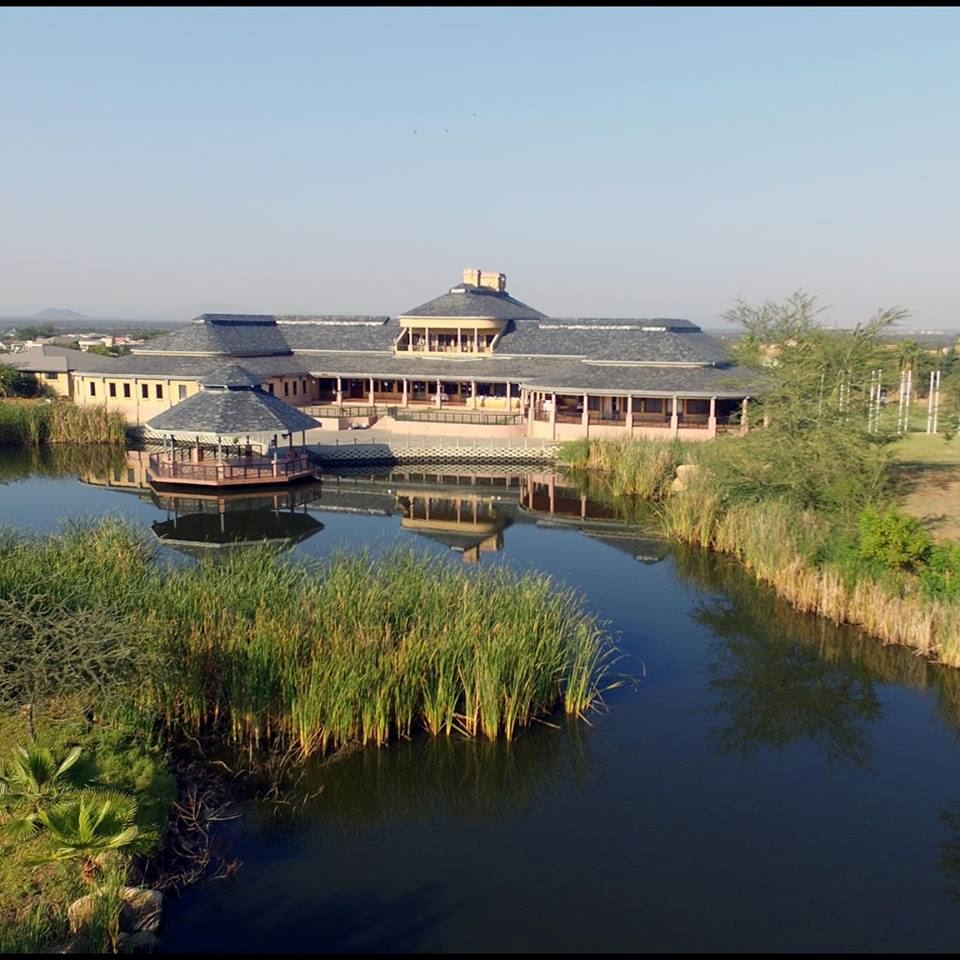
The book is only available in print at Exclusive Books (Airport Junction), Botswana Book Centre (Main Mall), and at Magang’s Phakalane Golf Estate conference centre. He should strongly consider digital publishing for international readers and the diaspora. Ranging from P295-430, it is on the pricey end — but it is a justified investment, as one shelves it as a better informed citizen.
For those abroad, feel free to reach out if you wish to acquire a copy 🙂
Works Cited
Magang, David. Delusions of Grandeur. Paradoxies and Ambivalences in Botswana’s Macroeconomic Firmament. Vol 2. PMC, Gaborone. 2015.
 Samuel Rubadiri