I had the incredible opportunity to publish my writing in a local newspaper, Business Weekly. It’s a critique of President Boko’s latest policy to ‘sell’ citizenship to increase foreign direct investment. I am no economist nor am I a political commentator by nature. However, I was alarmed by the lack of serious public discussion on this unprecedented development given our ‘ethnocentric’ view of citizenship. So I penned my thoughts and hoped to alert people on the ramifications of this decision. Personally, I am a strong advocate of migration and cosmopolitanism. We need more foreigners if we want to go anywhere as a nation; many don’t seem to see it this way. My issue is his method, as I predict we will lose more than we might gain. I’ll leave it there and let the article say the rest.
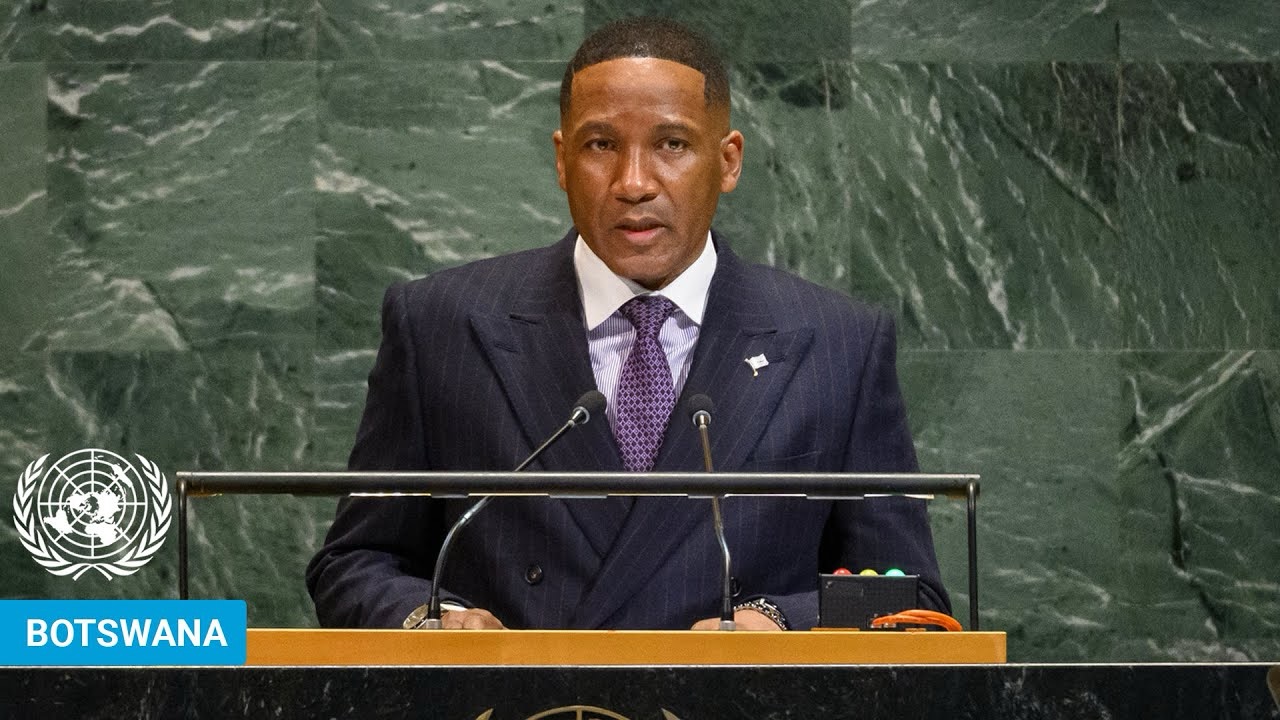
It’s been a month since President Duma Boko presented Botswana’s brand-new citizenship-by-investment scheme to the UN General Assembly at the tempting price of one million Pula ($75,000 USD). The cheapest citizenship in all the world. While laudable in its rationale to quickly address a horrid state of affairs — our recession — it is this kind of short-sighted thinking that got us here in the first place. It doesn’t fix the underlying problem. It may well exacerbate it: reactive leadership and legislation.
My issue is the lack of vision and proactive strategic thinking. It remains unclear what kind of country we are building — a tourist hub like St Lucia, a mineral jungle like Congo or a jack-of-all-trades like Germany. It’s all about positioning. How do we want to stand on the world stage, and more importantly, will we commit to it?
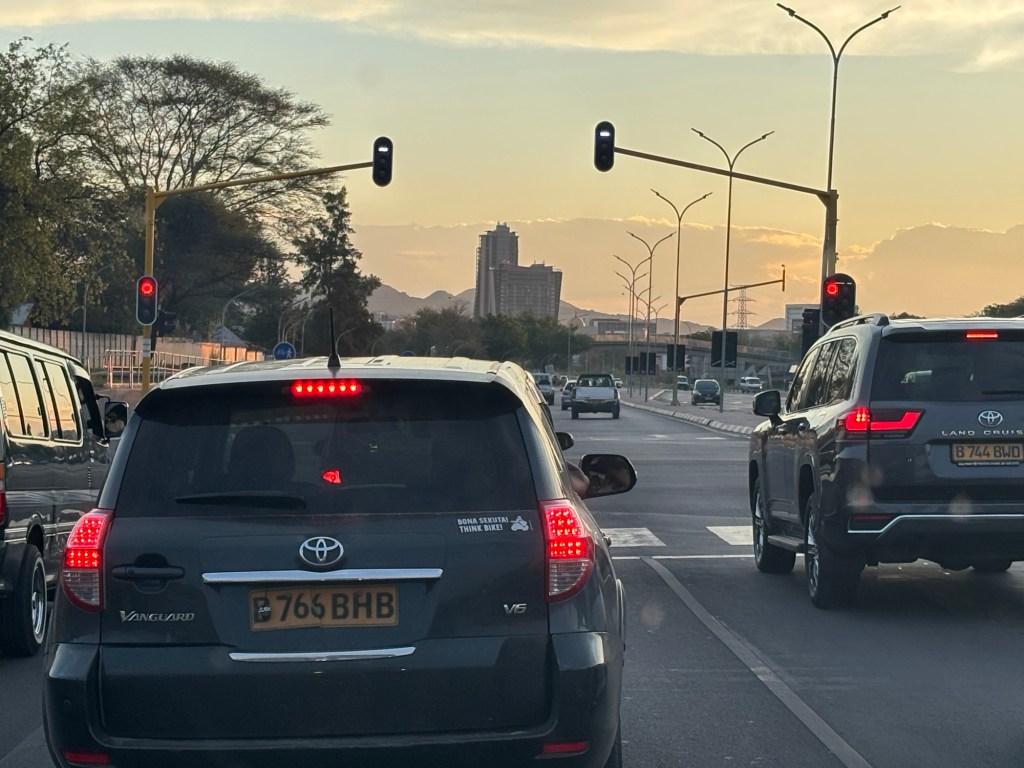
What is Botswana without its diamonds?
A desert…A safari paradise… A linguistic curiosity… an HIV/AIDS case study…a home for the Olympian Tebogo. That’s it. Therein lies the problem. We have not distinguished ourselves in any other way.
On one hand, our perceived obscurity protects us. We don’t carry the stigma of our neighbours. Zimbabwe is still shaking off Mugabe’s ghost, and South Africa’s apartheid has become a fashionable analogy for the humanitarian crisis in Palestine. On the other hand, we’ve been glossed over. We are a small section in the big book of African studies, summoned only when scholars need proof that democracy is not ‘unafrican’. Our rags-to-riches story makes an ideal case study — and little else. Perhaps that’s why we are commodifying our identity — to claim others as our own.
A pattern of short-termism
From independence in 1966 to date, Botswana remains largely underdeveloped, with its capital centuries ahead of its peripheral towns and villages. Lobatse, the headquarters of BMC and home to our High Court, remains untouched by innovation and planning. Even Gaborone — the pride of the nation — lacks aesthetic uniformity and developmental logic. There is no vision, no logic, no art, no love. Just a net of needs and ad-hoc solutions in a state unsure which direction it wants to grow in.
The citizenship-by-investment programme is not an isolated misstep, but another symptom of our long-standing pattern of short-term fixes to structural defects. Diversifying the economy has been a buzzword for as long as I have existed (three decades to be precise), yet much is to be desired. Our survival has hinged on diamond sales, and now that the sun is setting on that resource in light of lab-grown stones, Parliament must – actually – do something to save us from the resource curse that has finally taken effect.
But how do we help ourselves when we still cannot decide what we want to become?
The Land of Milk and Honey
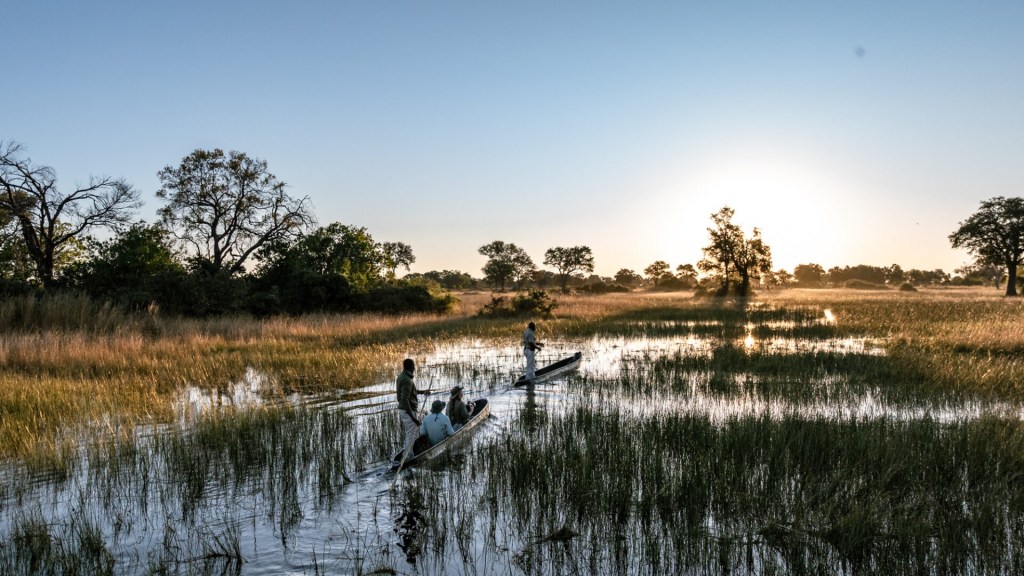
We are living on a fortune, yet we delay in seizing the gold in our backyards. What doesn’t help is that the powers that be frustrate those ambitious enough to make something of themselves.
Take Violet Hamilton, founder of Legae English Medium School, as a typical example. Starting one of the first privately owned, indigenous English-medium school for working-class Batswana in 1983, government tried to coerce her into relinquishing it to the state instead of supporting her vision for affordable, quality private education.
Then there is Botswana Meat Commission (BMC), a state-owned enterprise, suffering from unapologetic mismanagement that encumbers daily operations and growth to the benefit of a select few shareholders. For all the butchers in town, tanneries are far and few between. There is ample market potential for the production of leather shoes, belts, bags and clothes, but we would rather don our Asian-made clothes with pride.
We have stunning national parks in the North, yet our tourism industry underperforms, relying on foreign-owned businesses to sell the “African experience.” Even in the mining sector, it blows my mind that we haven’t established a jewellery industry or culture where our diamonds are cut and crafted locally to impress the world. Instead, our raw stones are exported to Europe, returning as luxuries we cannot afford.
If we struggle this much to value what is ours, perhaps it’s no surprise that citizenship — the essence of ownership — is in on sale.
For the longest time, dual citizenship was prohibited. In fact, the system was designed so that by the age of twenty-one, Batswana with dual nationality were automatically removed from the census unless they renounced their second citizenship. It wasn’t until a mixed child was forced to surrender their Norwegian citizenship that an exception was made, leading to dual citizenship reluctantly being granted in 2022.
Until that point, out of sacrificial love and loyalty for this country, foreigners would renounce their birthright to become Batswana. It was no easy task. The criteria demanded ten years of permanent residency, proficiency in Setswana and demonstrable contribution to the nation’s welfare — all subject to the whim of conservative gatekeepers empowered to deny applications without reason. Now all you need is a SWIFT transaction.
From proof of patriotism to proof of payment
With citizenship an invoice away, I can only wonder how our future will look. Will our small population double? Will a wave of multiculturalism and tolerance rise, or will privilege breed resentment? Heaven knows. Fearmongering aside, citizenship by investment is nothing new — but plenty of studies warrant our concern.
Let’s look at the facts so far. From the application pool, we can expect nationals from India, America, South Africa, Pakistan, Nigeria, Zimbabwe, Canada, the UK, Australia and Germany. Yet not all investors who acquire citizenship will relocate. At its core, the scheme is designed to secure foreign direct investment, not immigrants — and that distinction is crucial.
Malta offers a cautionary tale. Most of its new citizens never set foot on the island, creating ghost towns. They use their passports as a gateway to Europe or, worse, to launder money across borders. Some exploit legal loopholes to evade tax in their homeland. Ultimately, capital comes but community cankers.
If this is the trend, we risk being ghosted by the promise of investment. These would be real “paper Batswana.” As harmless as it sounds, we might exchange our dependence on diamonds for portfolios.
A gamble in the region
The real concern isn’t foreign faces; it’s foreign leverage. Our economy already functions as a quasi-province of South Africa, whose firms dominate our retail, mining and banking sectors. Through a covert SACU agreement in the 1960s, we were blocked from establishing manufacturing sites, and that economic stronghold still lingers.
If citizenship becomes another channel for South African capital, the risk is not invasion but absorption. Strategic tribal land acquisitions and corporate partnerships could cement cartels and oligopolies that no legislation can control. Foreign ownership will multiply at the cost of local empowerment.
This is a global phenomenon, to which South Africa falls victim. Many beachfront houses in Cape Town have been outpriced by Western businessmen thanks to their ‘new’ money. No wonder South Africans are pushing North to the next best market. Botswana is naively taking a gamble on a game they poorly play.
Gains and Losses
To his credit, President Boko is making the Botswana brand more attractive to the world, giving us a much-needed facelift and cosmopolitan ethos. Through foreign direct investments (FDI), he may succeed in jumpstarting our economy with new innovative business solutions from international talent. Coupling that with his objective to make our passport the strongest in Africa, he aims high. But passports are only as strong as the purpose they serve. A powerful passport means nothing if the people behind it are powerless — still waiting for opportunity to trickle down, still begging investors to believe in a land that won’t believe in itself.
But passports are only as strong as the purpose they serve.
As with all gambles, stakes are high. We chance losing more than we hope to gain. If careful, rigorous screening is not enforced, we risk opening pandoras box: money laundering, tax evasion, cartels, oligopolies, foreign dependency and other corrupt practices. Even if the scheme succeeds in attracting FDI, it may leave us permanently subordinated. Jobs will be created but at the cost of ownership unless civic empowerment is integrated into this transnational transformation. We will be employees, not founders, and our cash flow would be outbound. After all, we wanted job creation at any cost. Now we forever have them as employees.
Finding the voice of our founding fathers
It all boils down to identity. Without a clear vision beyond the ballot box, Boko’s scheme will turn into a fiscal fad until the next ‘man of the people’ takes office. Knowing this, politicians and policymakers alike need to look deep into themselves, into the spirit of the nation and let its wisdom guide our course. Our door is opening to the world but what does the sign above read? Pula… rain in and reign over us?
We must remember patriotism is not proven through paperwork, nor secured through POPs. It’s shown in how we build, protect and love this land, from the farms to the city gates and as far as the national borders. Nationhood cannot be outsourced.

Originally published in Business Weekly as a two part opinion piece.
Unfortunately, the piece is in print only unless you buy the digital copy.
 Samuel Rubadiri