Not that I like to, just that I have to
Bus through Glasgow, enduring
The rattles of motion sickness,
As the change of commuters
Shake the bus as a piggy bank.

I turn up my headphones
But cannot turn down the smell of
Smokers, stoners and homes without
Dryers. Mouldy clothes waft through
The aisles of the bus. I try mind

My business but their lack thereof
Reminds me what it means to bus
Through Glasgow. Youths from the shop
Always with their feet on the seat,
Always banging on the window shouting.

Why can’t they understand
Decency. The silence of sitting. I know
The windows are foggy, the stops unclear.
We all want off but must stay on.
Why make the commute so long?

Eighty minutes of my day,
Four hundred hours of my week,
The 38B shakes off of me.
All for a school day with no pay.

I steel my resolve like council steals
The city of good roads and tube lines.
I weather the artic ventilation and
Tolerate the madness in this bus.
To some You are a black hole That eats hope And swallows homes
Maybe I’ve dodged it The infestation When the termites Ravage the roots of my heart From the urban shoots Of city life
I watch my friends Struggle under the rubble Of the current recession They are made redundant Overworked and underpaid Living paycheque to paycheque Or off the legacy of their parents Who prospered Before the turn of the century
The irony of this century’s economy They are better read than their family And have little means to carry Them into the future. Like the unwanted
Child they escape To the Middle East Or take refuge On the islands of the North Sea
They tell immigration All the stories They need to never return To this desert city
Corruption crawls in the crevice Of cracked roads going home Crime creeps into the cars That tails the owner’s drive home Tires slashed at the gate Knives dance at the face Transfers made to pay their wage As the culprit wastes away Knowing that Their money is never returning Home
I am blessed To love a Gaborone Where rain falls from Jojo tanks Where power drips from sunlight Where work flows from family calls Ask and you shall receive So I asked for leave And I’m off To the Disunited Kingdom For all the same reasons They escape To prosper on greener soil
But I can never forget The home of my heart Auf Wiedersehen¹
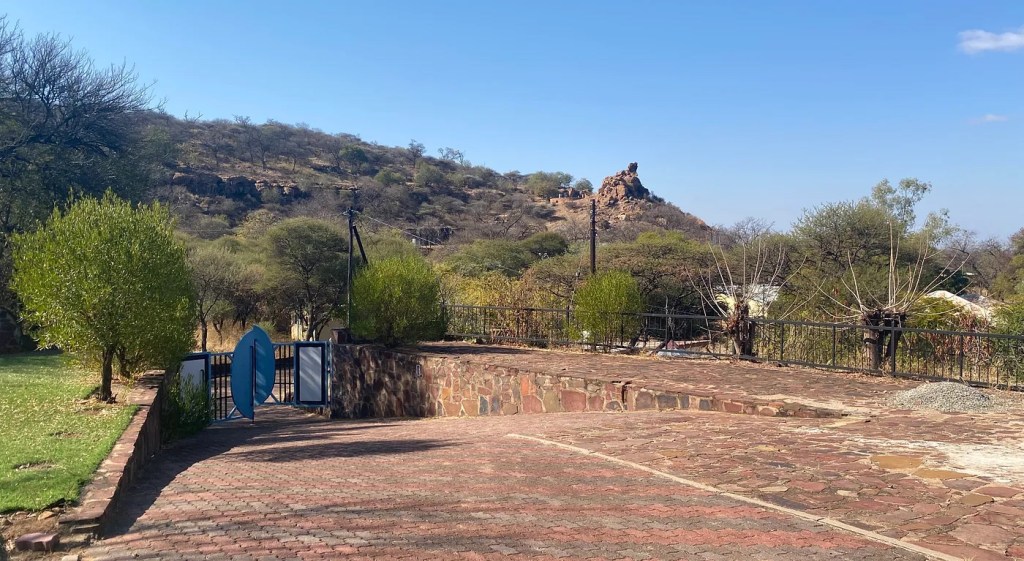
The land of hills and wind,
The light on the hillside,
Where royals grow tall.

From great rocks above
Rest the legends of the land,
Overlooking the village,
The Khamas in marble stand.

Below the Bangwato roam
Like sable antelope.
Spread as fine as spiderwebs,
They reside in the city and towns,
Proud of their culture, our national history.

It is from this tribe,
My mother’s people come,
But it is no longer our home,
A culture forgone.
Following the capital to the south,
We modernised, building:
Gaborone,
A city,
The global village,
Where all tongues meet and mix,
Where ties to tribe live past
The city boundaries.

The children know
Their Block and Phase,
Not their tribe and totem.
Their Setswana is broken
And their English
American slang.
Their lineage is international.
We are a headache to immigration,
As we don’t fit the culture’s mould
With one too many passports.
Where do they place us?

Still, I go to Serowe,
Not a boy in search
Of his father’s kgota¹
But as a transnational scholar,
Excavating the source of origin.

Rain winds batter my car,
Darkness clouds my view,
The GPS fails to find my lodge,
I am stranded in my tribal land.
I call the front office,
The lady says,
“Yes,”
Enough times to cut the line.
I get the impression,
“Ga ke itse sekgowa².”
I ask my companion,
“Talk to your tribesman.”

He is from the city,
Though his roots are in Palapye.
He feels more affinity to Kanye.
He calls the lady,
“Ga ke itse Serowe³.”
She tells us to go straight,
“We are up the hill.”
Her directions are as dark as the sky,
As cold as outside,
Reminding us:
We are Bangwato aliens.

That is when the truth unfolds.
Origin begins
At the point of departure,
Das ist der Ansatzpunkt,⁴
Not the well from which blood flows,
Not the office from which papers blow,
But the place from which I grew
Up, high enough to look back
At the hills of our elders’ memories
Of where they sowed their seeds.

To see
My grandma’s old house is
Now a museum
For Khama III. He sold it,
Yet my relatives mortgaged it,
Tearing any remaining ties
We had with the tribe.

Serowe is a juncture,
Where grandma started her life,
Raising my mother and aunt,
Until life, as it so often does, took them
South to new pastures,
Leaving Setswana with it.

Gaborone was a new place,
Needing a new language,
A world language,
For all those spat from the sea
To understand:
We are forward thinking.
1. Home in the village
2. I don’t know English.
3. I don’t know Serowe.
4. Das ist der Ansatzpunk: That’s the starting point.
It breathes and flows
Down to the belly
Of our city Gaborone.

The Segoditshane River
Has neither fortune nor fame,
Its riverbed is made dead

With urban waste and decay.
It rests in peace
And remains a getaway

For crooks and thieves
Whose den is in the green.
Had Government intervened,

There’d be more attraction
In the river, and not a sensation
On headlines: ‘Segoditshane is flooding.’

The river rampages and roars:
‘Beware: I am the Segoditshane River
A bane to all, crooked and straight.’

Let’s sing a song of sewage,
While we wait for the state
To save our garden city from

Wasted water on the streets.
The walls around me are as white as the page in front of me and as white as the sheet I’m seated on, until I shift on the sheet, “Oh sh*t, it’s now creased. Oh sh*t, it reeks.” Gas comes up like a kamehameha. Ahh, my nose! Those channeled fumes were released by my dietary choice of beans and eggs and rice. Of course, I can’t neglect the biology. My digestive tract broke that food into methane and hydrogen sulfide.
WRITE
I can’t write any of that. But I still have no clue what to write since it can’t be fiction. Too much about myself is self-indulgent, but I need something metaphysical conveyed in a true-life story. A classic ‘right’ gone ‘wrong’, or a ‘wrong’ made ‘right’. I close my eyes to look within. Listen. Introspect. Listen. Reflect. I can’t hear my inner voice beyond the outer noise of slamming doors, snorting busses and the stamping feet of hungry heathens. “No, they are not heathens,” I tell myself. Must not be so judgy. But the alliteration sounds good.
WRITE
I’m still staring at a blank page. It’s a grey day. Find the big ‘A’. A lesson…Achoo!
My trance is broken by a mighty sneeze. I sneeze repetitively into and onto white tissue paper like a songwriter. My nose scribbles through a hundred sheets. That’s the only thing I’ve managed to do. Write on tissue paper. “Oh, how creative my snot-hand is.” I lament. Those little boogers masterfully make origami … BEEP
“Screw you, you tosser car driver! I’m trying to build a parallel here with the tissues in a way that’s beautiful.”
I breathe out. My boogers. I listen intently to make sure the bus won’t interrupt me again. My boogers make superb origami swans, shoes and crumpled-up shirts. Sometimes in shades of gold and on hot days, rubies. I call them fortune cookies, for hidden within is a majestic gemstone. And their glow shows my health. But not today. They are as white as the blank page in front of me. “You know it’s breakfast”, my mind says. I should not
WRITE
on an empty stomach. But I can’t leave yet. My story lacks the big ‘A’. Too much showing and not enough telling. I contemplate a moral, a lesson:
“The events that transpired in this passage are all true. So too shall I say that the journey of every writer to bestseller is filled with vile distractions unmentioned in interviews, essays and journals. These include farting, judging, sneezing and eating. In fact, it is anything but writing, and when writing, it is like the knife against the flint. So the next time you pick the pen or browse the book, do not lie and say you just wrote a little or read a bit.”
“Mma,” the constable said over the phone, “we have the boys. They are waiting for you at the Station in G-West.”
About a half hour later, Danielle arrived. The station was empty and dusty. She walked slowly, supporting herself on her walking stick. The constable brought the two youths from the cell. He released his firm grip on their wrists and shoved them to Danielle. To the eye, these youths were barely men but hardly boys. They fell at the lady’s feet. They crawled to her dusty ballet flats, kissing them. Their saggy pants exposed their briefs, and the sight of them offended Danielle. Their jerseys were as baggy as their saggy pants, which collected dust as they licked the floor with their kisses at Danielle’s feet. To her, these youngsters looked like riffraff; examples of a degenerate foreign culture. She didn’t want to be near them. She stepped back once the kissing started.
“Stop it! You are only insulting me,” she warned, stepping back.
“Please Nkuku,” they cried. “Don’t send us to the kgotla. They’ll beat us senseless.” They looked at the officer, who placed his hand on his baton, and then back at Danielle. “Then our parents will beat those bruises, haibo!”
“Well if you had any sense in you, you wouldn’t have spoken to me the way you did,” she said, disgusted.
“Children these days,” said the policeman, flaring his nostrils.
*
About six hours earlier, Danielle was at Molapo Crossing Mall, running some errands. She went to the post office to send a letter to her grandson in England. There was a queue inside, but when the staff heard the creek of her walking stick, they guided her straight to the front of the line. The person being served even put his large parcel aside to make space for her. Everyone complied without murmuring. They all smiled.
“Thank you so much,” she said. “I just want to send a little letter to my grandson. I won’t be long, ” she said in a voice that shook as much as her stick.
“Aww,” said the clerk, “what a special grandson you must have to come all this way to send a letter.”
She rang up the till and Danielle handed her a red note. When the change came, Danielle received a handful of coins. She pulled out a coin bag from her handbag to separate the coins from the notes. It was fat and clunky, sealed by a metal clasp. She tensed her fingers trying to open it but accidentally jerked her hand sideways, causing some of the coins to pour out.
“Oh dear,” she exclaimed with her face brightening. “I’m such a klutz these days.” She tried to bend down but was stopped by the gentleman who was ahead of her.
“Don’t worry mma,” he said. “I’ll get it for you.” He squatted and collected all the coins rolling across the shop.
“You’re too kind,” she said. She went on to do her groceries. She pulled out a trolley and placed her walking stick inside. The guard at the front of the shop stopped her.
“Mma,” he said, “Let me help.” He took the trolley off her and gestured that he’d do all the heavy lifting.
“Oh dear,” she said to him. “What about your job? Don’t let me stop you.”
“The lady there can watch. We won’t be long,” he said before informing his coworker of her new duty.
The guard not only helped Danielle with the shopping but also accompanied her to the car in the parking lot.
There was another guard at the parking lot that wore the same uniform as the guard at the store. He took over, helping Danielle load her groceries into the boot. She was so overwhelmed by their manners that she took her coin purse from her handbag and gave each of them three days worth of transport fare. They thanked her, bowing partially with one hand placed over their forearm.
In the meantime, there were some youths loitering around the parking lot. Some were skaters; some were smokers and others were doping in broad daylight. All were unemployed and out of school. They listened to the hip-hop music that was being blasted from their boomboxes.
Chief, the ringleader, wore a durag, a vest and lots of fake jewellery. He wrapped his arms around two of his mates. “Yo Lolo and Dumz, how about a ‘lil game?” He teased. “See that gogo whose being attended to?”
They nodded.
“Get up in her grill, you know what I’m sayin’.”
Lolo was more reasonable than Dumz. He didn’t smoke or drink. He just hung around, for he had nothing else to do. Tending to his family’s farm was too much work for a guy who wanted to enjoy life. “It’s not cool,” he told his parents when asked why he stopped schooling.
He asked Chief, “Why? She’s helpless.”
“Nah my gee, you missin’ the point. Have a ‘lil fun, you feel? It’s just a game. Be cool, like us,” Chief said.
“Dee,” said Dumz. “Be a real one. It’ll be fun. Trust!”
Lolo fanned himself with his free arm. Dumz’s breath reeked of booze. Dumz took Lolo by the arm and ran to the exit where the road was. Since it was noon on a Wednesday, there was barely any traffic. Danielle’s car was the only one to leave the mall before lunch. They stood at the roadside waiting.
As she drove to the exit, Dumz and Lolo walked onto the road. She waited for them to cross, but they didn’t. She hooted. Nothing happened. Instead, the youths showed her both their middle fingers. Their friends at the other side of the parking lot watched. They laughed, dropping the ash from their blunts to the ground and spitting out the booze from their mouths.
Danielle unwound her window and shouted: “What the hell are you doing? Get off the road! It’s dangerous.”
Dumz walked to her window, which surprised Lolo, but he followed anyway. He looked her in the eyes and said: “Fuck off!”
Lolo’s heart raced. He felt thrilled. Danielle was unimpressed. She could smell by his breath and tell by his eyes what he’d been doing all morning. “Who did these fools think they were, talking to an elder that way?” She thought to herself, before addressing them again.
“What did you say?” She yelled.
Lolo, now excited, repeated what Dumz said. “He said, ‘FUCK OFF!’” He paused and then continued, “NIGGA!”
Dumz’s eyes went large. He couldn’t believe what Lolo said. He threw in the ‘n-word’. They laughed at her together.
“Excuse me! Who taught you to speak like that? I could be your mother,” she exclaimed, “twice over!”
Dumz, now emboldened by Lolo, went for it again. He stared at her squarely, with adrenaline pumping.
“Whatcha gonna do about it,” he said before looking at Lolo, then added, “NIGGA?”
Danielle scoffed. She looked at their faces and their clothes closely. “Report you to the police,” she said firmly, “Your parents should be ashamed.”
They laughed at the empty threat. What could she do? As if the police would take her seriously, Dumz and Lolo were confident of this. They walked back with puffed up chests. The crew was in tears. When they heard about what Lolo said and how it escalated, they fell over laughing. Chief patted them on their shoulders.
“You guys are real onez. You’ve got my respect.” He said, offering them a drink hidden in a black plastic bag.
Lolo felt important, like he achieved something. He liked that feeling. It was better than the emptiness he knew of being at home all day. “This is cool,” he thought to himself. So he took a sip. It burned going all the way down. He made a face to show his discomfort. The gang laughed as he passed it back.
Dumz spoke rashly: “Nah, nigga. You too soft. It’s nothing to brag about. Do the same to a cop or white man, that’s something.”
Chief looked at Dumz, holding a blunt to his hand. “Don’t get cocky. The cops aren’t a joke. They’ll moor you.”
He took a drag and blew it in Dumz’s face. “And you can’t do shit about it!”
“Fuck the cops. They’re useless,” Dumz exclaimed.
Chief was intrigued: “What did they ever do to you?”
Dumz kicked the thorn tree that shaded them and spat on the prickly grass. “Fucking asked my aunt to pick them up after she was robbed. What the fuck? Don’t they have cars?”
One of the girls that was spaced out held Dumz by the face. “Wow, such a baby face. Lemme tell ya sometin,” She started. “The police are efficient when they choose to be. My cousin was once made to lie on the side of the road while they inspected his car for drugs. They found none but confiscated all of his booze. So sweetie, be careful.” She said before kissing him.
Dumz shoved her out of embarrassment. She laughed. “Cops hate youngsters like us! They call us delinquents. All because we know how to have a good time,” she said before taking another drag of the blunt, winking at Dumz.
Lunchtime came. The crew were still as they were but got rid of the booze and buds in the bush around the corner when they saw the police. Like the rest of the people, the police were driving in for their meal. The gang took out their lunch and sipped on their sodas and ate their pies. They looked like everyone else except that once the policemen finished eating lunch, they approached the group. Dumz got tense but Chief calmed him.
“Maybe he wants a cigarette.”
The policemen greeted everyone, and the youths returned the greeting like children in school. One of them asked what they were up to, and they answered as Chief advised.
“We are enjoying life, nothing more, nothing less,” the crew said.
The policemen smiled, scanning the faces. Chief offered a cigarette, which they turned down politely.
“Could we talk with some of your friends,” they asked. “We’re looking for some information.”
Lolo looked nervous. “Surely it can’t be us,” he thought to himself, “it’s too quick.” Dumz was breathing faster. Chief entertained it. He assured everyone that it was protocol.
“About two male suspects who insulted an elder,” they smirked.
The crew burst out laughing except for the two who were implicated. No one could believe it. Before they knew it, Dumz and Lolo were at the feet of Danielle. Legally, she couldn’t make any charges over a few insults. It’s a misdemeanour, but there is another law, a traditional court of justice, where words have consequences. At the Kgotla.
*
“Forgive us! We’ll do anything. Whatever you do, just don’t send us to the kgotla.” They begged, prostrating themselves on the floor.
“We’ll work your yard,” said Dumz, reaching at her feet.
“No, we’ll work your masimo,” said a teary-eyed Lolo, “free of charge for like a month.”
“Mxm, you must honour your elders. You kids forget where you are from and with whom you speak. Look at how you are dressed. Officer, did you not also smell them? In my day, you couldn’t get away with half the stuff they do, especially when your parents’ fields need ploughing and cattle feeding! An example needs to be made.” She hissed, stamping her walking stick.
The constable nodded his head and looked at his wristwatch. His shift was ending, and he wanted to knock off for supper.
“No,” they cried, “anything but that.” They crawled closer to her feet, making themselves more undignified than before. They soaked their shirt in their tears, trying to clean Danielle’s dusty shoes.
It was too late. Danielle asked the police to notify their parents and the district Kgosi. He would decide the fate of these youngsters. How many times shall the whip skid across their bare backs? Only God knew. All the while, they wailed at her feet, and she shooed them away with her stick.
A few weeks ago, my great grandmother turned one hundred years old. Imagine! The world was a very different place. In commemoration of this momentous occasion, I was asked to write a poem for her to be shared on her birthday. Here’s a live recording of it, but I have included the transcript below for interested in reading. Evidently, my Setswana isn’t anything to ride home about but for the sake of time and place I did use a few expressions to capture the culture. Enjoy 😊
100 times
Has the earth
Revolved around the sun;
36525 times
Have you seen the moon
Chase after the sun,
Not you’ve kept count,
But let’s take account
That the world is a different place.
Many views are out of date,
The way of life,
As you knew it
Has changed.

When you came to this world,
Botswana was still a British protectorate,
Bechuanaland.
We saw ourselves as tribesmen,
Before calling ourselves citizens.
This family of yours was once
Solely Setswana speaking;
Look how we have grown,
Lekotwane Anglophones,
Cosmopolitans, living abroad:
Bo Ireland, America, Oman and the list goes on.

Can you imagine:
In your twenties, you saw your chief,
Our first president, Khama III
Return home with a white wife.
They came to your farm by the Tati River.
To you it was just another day,
But to us
We wonder
Like historians in archives,
What was it like?
Did those mixed children greet you?
Did you ever spank them,
Embodying the values of home,
“Ngwana mongwe le mongwe ke wa rona.”
Every child is yours.

When Khama was banished,
It was to your father
That he sold his house to.
Now it’s a museum; imagine,
Your father’s house is history.

Around the same time
You witnessed
A colour bar separate
Whites from blacks.
Apartheid was practiced;
To you it must have been life,
To us it is the vilest thing,
Black and white
In our textbooks,
We read your life.

By the time you were forty,
Botswana was birthed,
And I wonder
what difference it made
To say that you are a citizen
And not just Bangwato.
Then again,
You had to register,
For the law favoured the patriarchs,
And you were Motswana
Through your mother,
How times have changed.

By the time you reached sixty,
Botswana’s economy was booming,
As were the death rates to AIDs,
Which ate a generation,
Burying the children of the soil.
How was that for you?
Just another day
Under the hot sun
Of Gaborone?

Forty years stronger
You saw your children
Stop watching faces
To start staring
At television screens and phone screens,
Yet you resisted the devil’s devices,
And I imagine are happier for it.

You saw your chief’s son
Ascend the throne of parliament,
Only to be exiled for embezzlement.
To think that those caramel bears
Were a nuisance.

You outlived the queen of England
And survived the epidemic of Covid,
Though you had to bury more children
Than one would have hoped to.

All this is to say:
You are a hundred years old.
I guess that is perspective,
When we look at the timeline
Of the last century,
But knowing you,
That’s not how you’d look at it,
From the lens of politics and economics.
That’s what scholars do.
You are a mother, grandmother,
Great grandmother
And now a great great grandmother.
Truly, you are the definition of an elder.

What matters to you is family,
And yours started at fourteen
When you were married
To a man much older than yourself,
Twice your age to be precise,
From pastures much greener than Rakops
What an era.

The youngest marriage registered
In the history of Botswana.
Congratulations on living a life of firsts.
To think the London Missionary Society
Would have had you sit
At the back of the church at your wedding,
Because of you were a ‘half cast.’

Still,
You gave him six children:
Violet, Patrick, Selby,
Albert, Dorothy, Eileen.
What a full life.

You were schooled on a wagen
By a tutor on the commute.
You trained as a seamstress,
Designing some of the finest dresses,

But that’s not how we remember you

By your children and exploits
In the shifting landscape of our
Landlocked desert’s high rising buildings
That was once nothing more than bush.

We remember you
By the things you’ve done for us,
Like the crumpets and popcorn
You’d serve us when we’d visit.

We remember you
By the ice lollies
On hot days and the hot faces
After misbehaving,
Slapping sense to our senselessness,
A matriarch who’d not spare
The rod and spoil the child,
A virtue worth praising.

We remember you
By the sacrifices,
Supporting the single mothers,
To get back on their feet,
And loving the lonesome child
Without a stable home.

We celebrate you,
A mother among mothers!
Happy Birthday
From the children of tomorrow!
P.S. Just a snippet from a road filled with memories
A stretch of strangers
On a tattooed tongue
Overtaking then overtaken
By buses and trucks,
Swallowed and spat.

We share much common ground,
The tread of tyres on the ground —
Driving — it comes with camaraderie,
Trying to arrive despite
The hypnotism of waves of blades

Of golden grass and dabs of thorn trees.
The glare of the sun waters
The road in a mirage
To the weary eyed driver. He sees
The skid marks bleed black

Before the body parts splat
To the tune of dancing glass.
Shattered. Wrecked
Cars rust where cattle graze.
The daydreamer awakes

From his worst nightmare
On this road that rarely bends.
A car wreck rests just off his lane,
Within in his line of vision. “Hell,”
He thinks, “It is a drift away.”
*The A1 is a highway that runs through Botswana but it is also known for fatal car accidents.






 Samuel Rubadiri