While at the Funeral

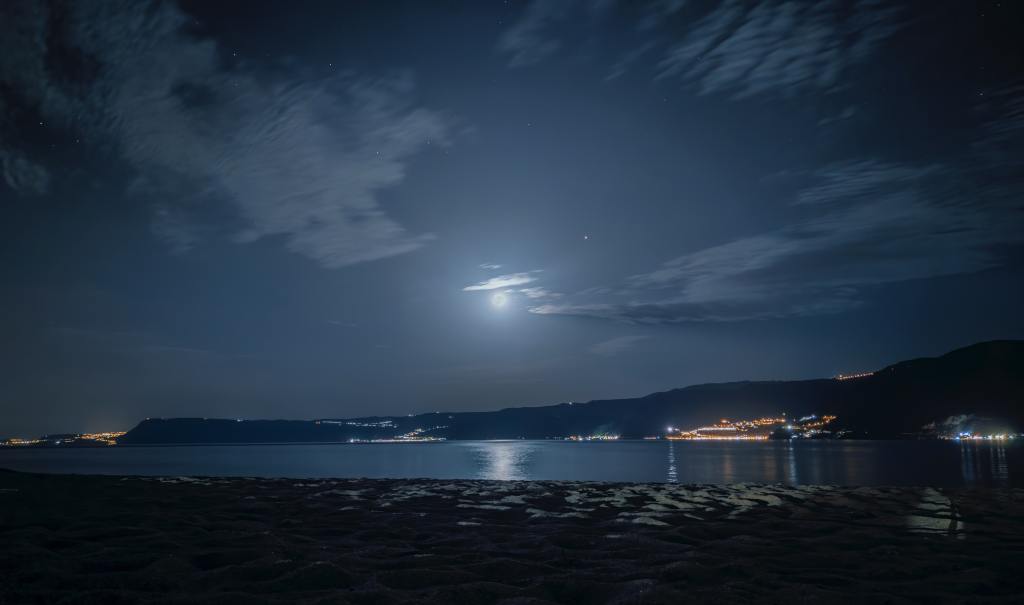
Photo by Ryan Crotty on Unsplash
Narrated by Samuel Rubadiri
Give me a hug and say that everything will be alright,
coz what I witnessed were the ashes of a friend 
tossed into the heavens, while I searched for them in the clouds.

Did we fail you? Can we even speak of failure? 
Must there be a fault? 
How else can we understand your actions?

All who breathe shall someday cease to,
but to resolve to end of one’s own life is
an irreversible choice. There is no “whoops!

My mistake, I was not thinking straight.” There is no
restart. 	There is forgetting. 		You
fade from our memories. We move on. Always onwards!

Others take your place, and fiction is made of your life.
You become a lesson on mental health, an example
of why men should open up more about their feelings.

Elegies are not my favourite type of poem for all the reasons that make them beautiful. It is because of what they represent: tragedy, loss, grief and a stockpile of questions. ‘Why so soon and this way, why them, could it not have been prevented?’ At once, our friend, relative, lover – you name it – becomes a memory, and like all memories, fade or shift into obscurity of what we wished had been or what we wish to keep in remembrance. No man is meant to live forever, and some goodbyes are better than others, but a loss is a loss, no less, and the emotions that follow are equally as real.

In the last year, I’ve had the displeasure of writing many of these poems for people I know. With this pandemic, I do not doubt that many of you have experienced this same loss, if not already in your own lifetime. I’ve been hesitant to share them for many reasons, but a friend encouraged me to put some of them out there in hopes that it may also console others who can relate to the displaced emotions that come with grief.

An Autumn Sunset

By Samuel Rubadiri
I feel the sunset, and at once, I am elated.
I try to capture the feeling as a screensaver,
But as soon as I snap the scene,
The moment is gone and the memory dead.

I lose the sunset in a photograph
To the phone warm in my pocket.
Although it captures the watercolour horizon,
Spilling into darkness, I feel more.

From within the train, witness
How cyan wrestles the sun,
Kicking up blackening clouds, 
While trees intersperse the view. 

Every second, the sky darkens
- the day retreats in defeat -
Into the haze of the dripping sunset,
Taking that feeling with it, a hostage.

Now all that remains are these hands,
Desperate and cold, fighting the phone.
Knowing that those that see
My story will never know these feelings.

The poem was inspired by this badly taken photo of a sunset on a train ride home. At the time, it was a mesmerizing sight to behold, but its beauty was beyond my skill with technology to capture. The poem, then, is me trying to salvage those feelings in a few stanzas. What can I say: nature escapes us all. We can only witness it in a moment that fades with the experience.

Intro: Dream Chaser

Photo by Lisa Therese on Unsplash
By Samuel Rubadiri
We were born into this world unequal,
And although some might have more,
We all have dreams.

Dreams allow us to overcome,
These inequalities,
So we should always remain faithful to them.

But this isn't easy
Easy is giving up

(instrumental break)

Giving up your dreams unto the night,
Sleeping on your promise like it is a lullaby.
Bye-Bye Birdie, you gotta fly or deny your dreams.

Life is like gravity,
it grounds you and holds you with
responsibility

But history waits for no man
Only the bold with the plan.

So this is your time,
This is your moment,
History is waiting, pages are blank,
Go make your mark and overwrite history,
Make a legacy Dreamer!

The backtrack is from the “Intro” to J Cole’s mixtape The Warm Up. I was inspired by his spoken word piece and decided to experiment with the same track, doing my own spin-off of the original. You can find the live recording here.

Freedom to Breath

Photo by Jéan Béller on Unsplash
By Samuel Rubadiri
Check out the pace of the plague.
Insane! Cough, cough, people drop
like black lives 'round blue lights
in broad daylight. I wonder why - God -

"I can't breathe."

The pain, the pain, must cease.
Police please! I protest peacefully. 
Silly me. I must die slowly
for the world to notice me. I wonder why - God -

"I can't breathe."

Peace to supersede understanding
is hard to find in persecuted timing
when politician play on our feelings
only to endorse the police in our killing. I wonder why

I can just hear my brother, crying, "I can't breathe."
Now I'm in the struggle, and I can't leave.
Calling out the violence of the racist police, 
we ain't gonna stop, till our people are free*.

And now I stand before the Saviour, Maker,
a martyr. Father, they know now what they do.
So untrue! They do and deny their hate.
It's history, and now that I am in history,
I hear "NO JUSTICE, NO PEACE!",
but blessed are the peacemakers,
for they shall be called children of God.

But the children of God were on Capitol Hill,
praise giving, flag waving and in spirit slaying,
and the children of God were on the streets,
protesting "ALL LIVES MATTER!" to "BLACK LIVES MATTER!"

I would speak up, but I was suffocated,
so the streets shout out:
"Whose children are these
that mock my murder and burn my country asunder?

Whose children are these
that incarcerate peaceful protestors?"
Tell me this much, Father, that I might 
rest in peace than stir violence in my sleep, singing

I can just hear my brother, crying, "I can't breathe."
Now I'm in the struggle, and I can't leave.
Calling out the violence of the racist police, 
we ain't gonna stop, till our people are free*.

So I pray for freedom,
sow seeds for freedom,
protest for freedom.
Oh God bring freedom

that your sons and daughters might breathe
freely than die in police custody.
"Let freedom ring!" like the good King proclaimed, 
and let Lady Justice sing to this tune. 


*Taken from Samuel L. Jackson's I can't breathe song


Considering Jesus at Gethsemane

Photo by Stacey Franco on Unsplash
Voiced by Samuel Rubadiri
Abba Father, 

My heart and reason 
tell me that you’re a demon, 
You'd condemn your son to crucifixion
that mankind might be saved -

Might – the off chance,
not the power in me,
but the power given to them,

'Might' they only believe in it,
to be as I am, a Child of God.
Still, I’m scared to death of dying,
to know my destination, its humiliation,
that in a sunrise, I’ll be stripped naked, 
flogged mercilessly and crowned with thrones
“King of the Jews”. I grieve.

I grieve that I’ll have to carry my cross up Calvary,
only to hang on it with nails of treachery,
and in a sunset, you’ll forsake me, 
the one in whom you are well pleased.
You’d turn your eyes away from me.
How can I drink of this cup that is as bitter as gall?

I have no peace; it left at supper 
and sold me out for a bag of silver.
Judas, my brother and friend
with whom I’ve broken bread
summons my executioners.
Now I’m here at Gethsemane, 
sweating blood and seeking strength
to combat all this distress.
But how can I be strong?
How do I surrender to your will
when this is what it means?

Peter, James and John, my dearest friends,
they sleep as we speak,
unable to keep watch with me.
And as soon my captors come,
they, like Judas, shall abandon me, too. 
Alone I will be with this fate, with this fear
that shakes me to the core.

Hell has prepared a banquet in my honour.
If I sin, they win my soul along with the saints,
waiting for me in purgatory. 
For this reason, I must obey,
I am compelled to obey - unto death -
that I might become sin to overcome it.
But my human faculties challenge my obedience,
my heart rebels against subservience, and my mind
questions your character in ways I dare not utter.
Verily, verily, now I see how great Adam’s fall was.
"If you are willing, Abba, take this cup from me. 
But not my will, but yours be done." 

So to the devil in my doubts I say:
"Father, I have hidden your word in my heart
That I might not sin against you." 

I wage a war within me, a war with this flesh,
as it screams in the blood running down my forehead,
the casualties of my heart and reason:
be strong oh my soul, and march onward!
do not be afraid nor discouraged
Death might have me, but he does not own me.
The feast he plans shall be thwarted.
So Death be not proud, though some have called you 
mighty and dreadful. It is not so.
I might sleep tomorrow, but my rest means your death. 
It will be finished, the work set before me.
Thank you Father for the grace to see this through!

Yours is the Kingdom, the Power and Glory
For now and forever
Amen

Departure

Photo by Giuseppe Famiani on Unsplash
Voiced by Samuel Rubadiri
 I spend hours waiting,
 waiting for the sun,
 for the vessel upon the horizon.
 But my view is blocked by a curtain,
 this star-lit sky, its melody, 
 the hum of the ocean, saying, "recede, 
 recede on that crescent promise." 
  
 Precious time, she passes
 with the waves, enticing my feet,
 tickling the rocks. We giggle, 
 and the soil leaves a question.
 Why not remain on this shore?
 In the distance, I hear the house, its voices,
 their warm invite. It tempts me to return.
  
 A thought blows. Never, not a chance!
 But my heart flirts with it,
 the hairs on my body stretch out to it.
 Never, not a chance! bellows my mind again. 
 “There is no love in Locksley Hall
 only the love that leeches onto memory.”
 I swallow my resolve, waiting for the vessel. 

The Eurafrican

Voiced by Samuel Rubadiri
 She sounds like Africa
 From the beating of her beads along her braids
 To the rattle of hoops and bangles worn 
 And intonation of words as they flutter as a dole of doves.
  
 But she was raised in Europe
 With the nuance of talk and distance she keeps; 
 Sun rejected by her umbrella, she loves winter
 And how it colours her skin as fire its coals. 
  
 She fears her kind
 Who stint in ancient practice, live by difficult means, 
 Enjoy the fruits of their labour with the poison it bears
 'Rumours of our anarchy'. So she fixes her purse to the stars.
  
 She’d only sojourn the African homestead
 When five stars shine over her mother’s house,
 Where her purse can purge and censor the sight of squalor
 With the safety net of silk-threaded hairs around. 
  
 This is the Eurafrican dilemma:
 Culture continues whilst the ties tear.  

Beyond Black

Voiced by Samuel Rubadiri
“The world is not white. It never was white. It cannot be white. White is a metaphor for power.” – James Baldwin
  
 We were made to be black. 
 We were made to be 
 Black nigger kaffirs.
 We were born into these names
 From colonial slavers.
  
 Bondage was imprinted
 On our tongue as their
 Guns and whips started to
 Lynch our lips and embroid our skin,
  
 Our brown skin
  
 With blackness. They inked
 Our eyes with lies of what black
 Meant – plague to God’s light - 
 A reason to save the dark continent
  
 By whitewashing its history
  
 To a colonial beginning. So
 Brown became black.
 Facts etched out;
 Truth blotted out
  
 Of who made their world rich
  
 By building it. It was us,
 Our labour, and our wish
 Was only equality. We 
 Redressed the disgust
  
 You labeled as black
  
 Making it popular, 
 Profitable and enjoyable.
 Yet you are not satisfied. 
 Black will never be white
  
 ENOUGH
  
 Of this race war, this binary,
 This eurocentrism.
 ENOUGH of dialectics.
 Why should we deconstruct 
  
 Your backlog of scholarship
  
 To voice our discrimination
 Dis crime in dis nation?
 We are not victims.
 We are not a minority.
  
 We are history, and
  
 That history is our present, 
 that we are still African before
 American, protesting our skin 
 with a clenched fist to say:
  
 “We are beyond black.” 

*Brief remark: This poem was written as a form of solidarity to the BLM demonstrations that took place worldwide in 2020.

A Cry for Mma Africa

Voiced by Samuel Rubadiri
 I cry out to the mother of mankind,
 maker of thousands lands and
 languages. I cry out
 for air as Doctor slaps my bottom
 whilst holding me upside down.
 I cry out as the blood bulges in my noggin,
 and my eyes capture first sight
 of mama, of Mma Africa.
  
 I see the construct
 of blackness, of struggle,
 of anthropological value.
 I see mama’s voluptuous body,
 with breath-taking breasts
 whose nipples drip with oil and ivory.
 I see mama’s resourceful thighs
 open the mountain with a valley
 of uncharted territory, and
 I see Doctor’s selfish smile.
  
 Doctor freely places me in the cradle of mankind,
 as he prepares to excavate the afterbirth.
  
 The warmth of mama’s bare chest,
 her rhythmic heartbeat,
 her vibrato voice saying,
 “Ke ngwana wake[1]”
 -pacify me.
 She smiles at her child until Nurse
 takes and displaces me. Doctor
 must concentrate, for he drills with bony fingers
 into mama, Mma Africa’s vulva.
  
 We cry.
  
 But our voices vanish in two different languages
  
 All I catch a glimpse of
 is Mma Africa’s bleeding
 of natural resources. This nostalgia
 of diaspora is or was a memory
 since I can no longer recall
 she who birthed me
 or understand when kinsmen tell me,
  
 “Ubuntu[2]!”
  
 I can only make sense of the
 twenty-eight stars in heaven,
 wheeling across the surface of the earth
 as a halo a saint.
 I can only see her colony of children
 crawl out the continent
 as ants out a hill to the brilliance of
 four omni -potent -present stars
 that plunder homelands
 leaving the wastelands for Doctor.
  
 I cry out to Nurse, for her
 whose blood gnaws me
 with eclipsed sight and tender soul,
 but she summons Mother
 to anglicise me.
  
 Years later, those tears
 turn to whining, and as I
 wine, I find ambrosia
 as a son of the everlasting stars.
  
 But a salient thought,
 so old it’s novel, so familiar it’s strange,
 strikes through the subconscious.
  
 “Ke ngwana wake.”
  
 wakes me
 with questions of identity.
 No romantic or germanic tongue
 can touch or taste or tell
 me the meaning of those
 ‘First heard’ words
 ...From...
 Mama, Mma Africa.
  
 It’s the cry of sun on snow
 cracking white mask
 on silhouette skin.
  
 But how do I return to you, mama, after so long?
 How do I answer your cry? 
 
 [1] Ke ngwana wake = “my child” in Setswana 
 [2] Ubuntu = “I am because we are” in Zulu (African philosophy) 

Katabasis*

Image by Laura B from Pixabay
Voiced by Samuel Rubadiri
 “The mind is its own place, and in itself
 can make a heaven of hell, a hell of heaven” 
 - John Milton -
  
 Descent. It means being down on your luck,
 Down in your hell, deep sea-diving into your doubts.
 It’s daunting – a new kind of despondent.
 It’s a great valley, in which you are downcast.
  
 But you are no bottom dweller.
 You must remember that – descent –
 Can be an ascension even if
 The pressure rises the deeper you go.
  
 You must remember that
 There can be a heaven in a hell,
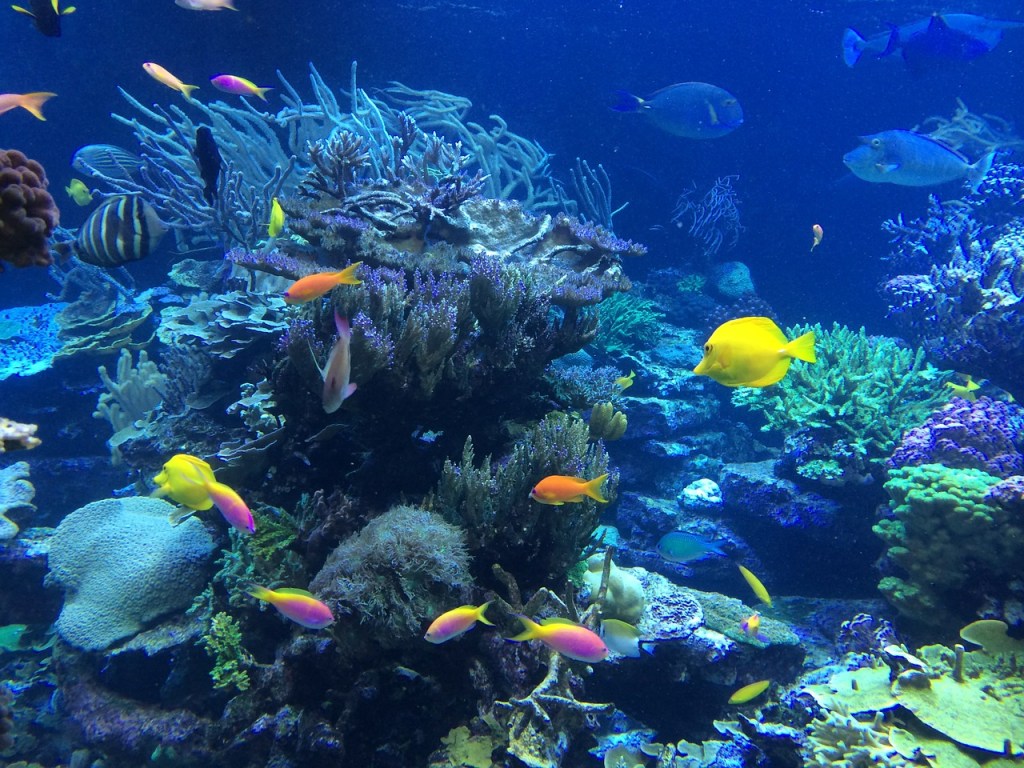
 The seafloor is a disco coral reef after all.
 Best you remind yourself these things. 

*Katabasis is a Greek word to describe some type of descent. In literary studies, it can be understood as a downward journey into the underworld.